
If you are wondering whether brightening facials actually help with dark spots, the honest answer is that they can help, but with limits worth understanding before you book.
Brightening facials can genuinely improve mild, surface-level dark spots and give skin a more even, radiant look, especially over a series with good sun protection. They are not a cure for deeper pigmentation like stubborn melasma or older sun damage, which usually needs stronger treatments such as lasers. And no facial holds its results without daily sunscreen. Think of a brightening facial as a strong maintenance and mild-improvement tool, not a one-time spot eraser. This article is general education, not medical advice.
Here is what a brightening facial really does, which dark spots it helps, and when you need something stronger.
What a Brightening Facial Actually Does
A brightening facial combines gentle exfoliation with ingredients that target dullness and uneven tone, things like vitamin C, antioxidants, and brightening actives. It lifts away dead surface cells, boosts radiance, and over a series can soften the look of mild discoloration. It is a comfortable, no-downtime treatment focused on making skin look fresher, clearer, and more even. What it is not is a deep, one-and-done pigment removal, and any honest provider will frame it that way.
Do Brightening Facials Remove Dark Spots?
Not exactly, and this is where expectations matter. A brightening facial can fade the look of superficial spots and keep your overall tone even, but it works on the surface. Deeper pigment sits below where a facial reaches, so a single facial will not erase an established dark spot. What a consistent series does well is improve clarity, prevent dullness from building back up, and support stronger treatments. For many people with mild discoloration, that is genuinely enough. For stubborn spots, it is a starting point rather than the finish line.
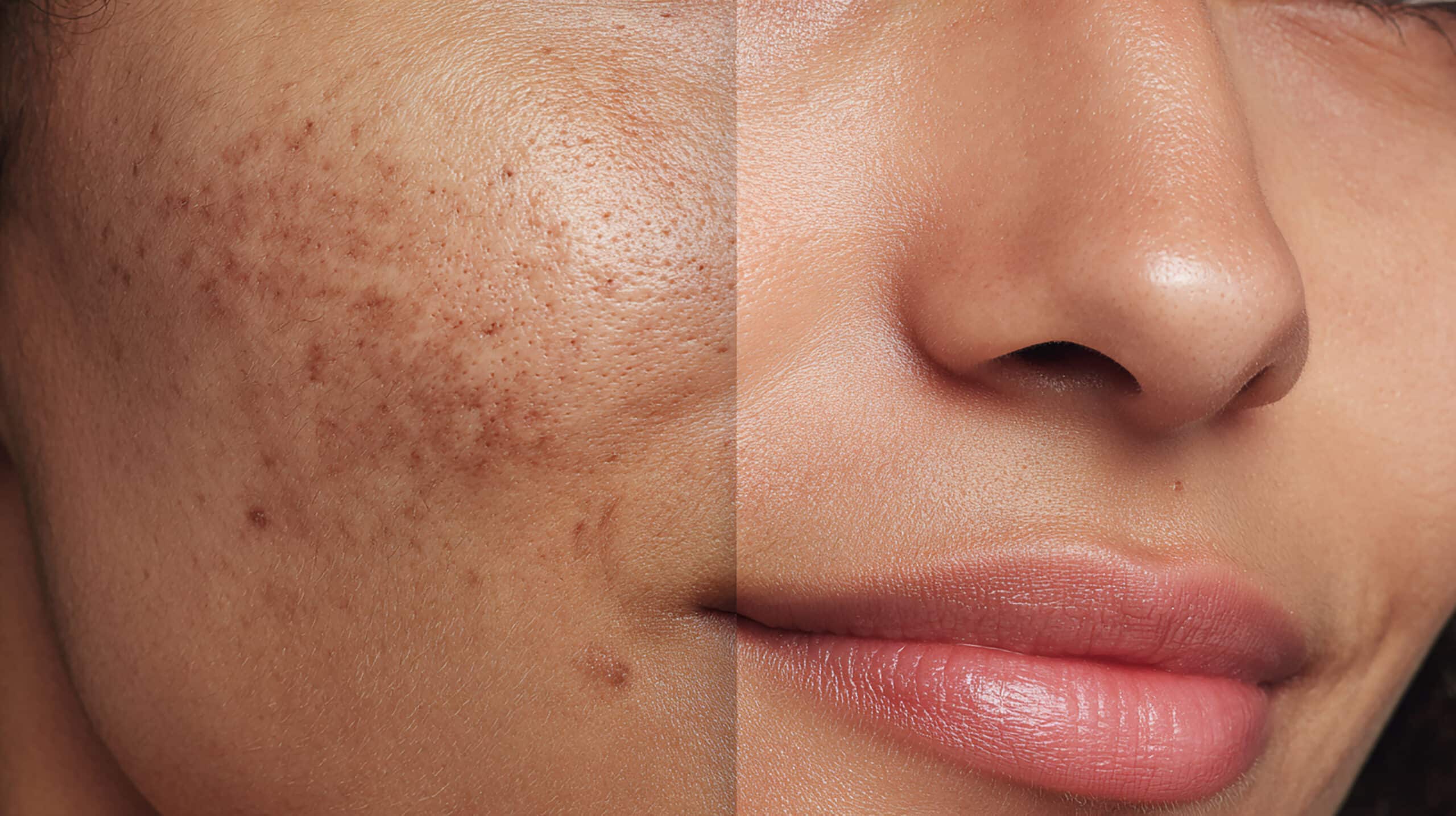
What Actually Causes Dark Spots
Knowing the cause explains why a facial helps some spots more than others. Most dark spots fall into a few groups, and they do not all respond the same way.
- Sun damage, where years of UV exposure leave freckle-like spots and patches.
- Post-inflammatory marks left behind after acne or irritation.
- Melasma, a hormone-linked pigmentation that is famously stubborn and easy to worsen.
Surface sun spots and fading acne marks often respond well to brightening treatments over time. Melasma is a different animal, it needs a careful, gentle plan and strict sun protection, and it is prone to returning, which we cover in why melasma comes back after treatment. It is also worth understanding how professionals treat melasma, texture, and tone before choosing any treatment.
When You Need More Than a Facial
If your dark spots are deep, long-standing, or not budging with facials, that is the signal to step up to a stronger treatment. Options like a carbon laser facial, a targeted laser facial, a laser treatment for melasma, or resurfacing with a CO2 fractional laser reach the deeper pigment that facials cannot. The right choice depends entirely on the type of spot and your skin, and some pigment, melasma especially, reacts badly to overly aggressive treatment, so this is a conversation to have with a professional rather than a guess. Our guide to carbon laser facial benefits is a good next read if lasers are new to you.
How to Get the Best Results From Any Brightening Treatment
Whatever route you take, a few habits decide how well it works and how long it lasts:
- Wear a tinted broad-spectrum sunscreen with iron oxides every day. UV is the biggest driver of dark spots, but visible light contributes too, and clear sunscreen does not block it at any SPF, which is why the American Academy of Dermatology recommends a tinted formula with iron oxides. The tint is what does that job.
- Commit to a series rather than a single visit, because brightening builds gradually.
- Match the treatment to the spot, using facials for mild tone and lasers for deeper pigment.
- Be patient and gentle, especially with melasma, which worsens when pushed too hard.
For a wider view of how these treatments fit together, our skin rejuvenation guide lays out the full menu.
Get a Dark-Spot Plan Built for Your Skin
The best results come from matching the treatment to the type of spot. Our team will look at your skin, explain honestly what a facial can and cannot do for you, and build a plan that fits. Book at Buena Park, Lakewood, or Newport Beach.
Book a Brightening FacialSee All TreatmentsFrequently Asked Questions
Do brightening facials really help with dark spots?
They can help with mild, surface-level dark spots and overall dullness, especially over a series with daily sun protection. They are not a cure for deep pigmentation like stubborn melasma or old sun damage, which usually needs stronger treatments such as lasers.
How many brightening facials do I need to see a difference?
Brightening works gradually, so most people do best with a series rather than a single facial. Your provider can suggest a realistic number based on your skin and the type of discoloration you have.
What is better for dark spots, a facial or a laser?
It depends on the spot. Facials suit mild, surface discoloration and maintenance, while lasers reach deeper, more stubborn pigment. Melasma in particular needs a careful approach, since it can worsen with aggressive treatment, so a professional assessment is the safest way to choose.
Will my dark spots come back after treatment?
They can, especially without sun protection, because UV and visible light both trigger new and returning pigment. A daily tinted sunscreen with iron oxides, which blocks the visible light that clear SPF misses, plus ongoing maintenance are what keep results looking their best.
Comments are closed